

A semicolon (;) has three real jobs. It links two closely related complete sentences, it sits in front of a transition word like “however” when that word starts the second clause, and it splits list items that already have commas inside them. In most work writing, though, two separate sentences will read cleaner than a forced semicolon.
Key Takeaways
- A semicolon is a punctuation mark stronger than a comma but weaker than a period. It connects two complete sentences that share a close relationship.
- There are three kinds of correct semicolon use: joining two related independent clauses, placing one before a transitional expression like “however,” and separating items in a list that already have commas.
- In short business emails, Slack messages, and LinkedIn posts, you will generally get better results using a period and writing two sentences instead of reaching for a semicolon.
- A semicolon balances two ideas with equal weight. A colon introduces something, like a list or explanation. Do not mix them up.
- A grammar checker can catch punctuation slips before you hit Send.
Semicolon basics: fast answer for work writing
A semicolon links two complete, related sentences into the same sentence. It sits before conjunctive adverbs (however, therefore, meanwhile) when they connect two clauses. And it separates items in a list when those items or phrases already contain other commas.
- Independent clauses are a group of words with a subject and a verb that can stand alone as complete sentences. Semicolons join two independent clauses with related ideas.
- Semicolons separate related independent clauses without conjunctions. They create a stronger connection between clauses than periods do.
- In emails and LinkedIn posts, you can almost always replace a semicolon with a period or a comma plus “and.” Your reader will still understand.
- This guide covers everyday professional writing, not school essays. If you are a busy SDR, marketer, or recruiter, keep reading.
An independent clause has a subject and a verb and expresses a complete thought. It can stand on its own as a sentence. When you use a semicolon, both sides must be independent clauses. A fragment on either side is wrong.
Here are a few examples from work writing where a semicolon fits:
- “Our demo calendar is full this week; I can offer you Thursday at 3 p.m.”
- “The campaign hit 12,000 clicks in the first week of the month alone; conversions are still climbing.”

You can also write those as two sentences: “Our demo calendar is full this week. I can offer you Thursday at 3 p.m.” In most business writing, that reads faster.
The connection between the two statements must be obvious, like cause-effect or contrast. If the link feels weak, use a period instead. A semicolon suggests the ideas belong together, so make sure they do.
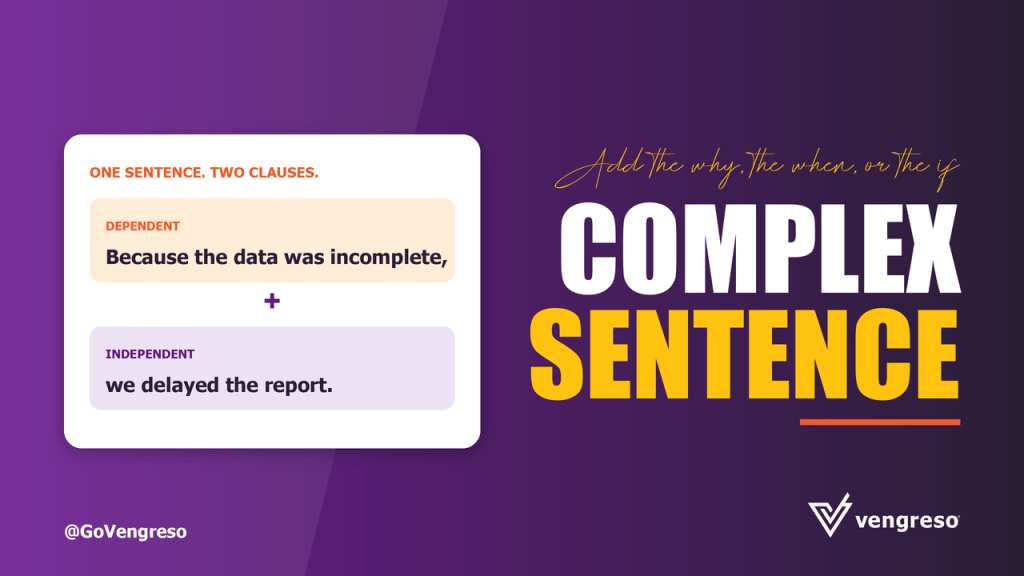
Common mistake: Do not use a semicolon to join a dependent clause with an independent clause. “Although the client was late; we started anyway” is incorrect. The correct version uses a comma: “Although the client was late, we started anyway.”
Another rule: Do not use semicolons with coordinating conjunctions like “and,” “but,” or “or.” “We sent the proposal; but the client did not reply” is wrong. Use a comma: “We sent the proposal, but the client did not reply.” In most work writing, use a semicolon or a conjunction, not both. Chicago does allow a semicolon before a conjunction when the clauses are long or already contain commas.
Use 2: Semicolons with conjunctive adverbs and transitions
Conjunctive adverbs and transitional expressions (however, therefore, moreover, meanwhile, in contrast, for example) often appear between two related sentences and can explain the connection between the clauses. When they join two independent clauses in the same sentence, you need a semicolon before the conjunctive adverb. A comma alone is not enough. Place a comma after the transition word.
Both The Chicago Manual of Style and The Associated Press (AP) Stylebook accept this pattern. A few examples:
- “We reviewed your contract; however, legal needs another day.”
- “The pipeline grew 40% last quarter; therefore, we are expanding the team.”
- “Three reps hit quota early; meanwhile, two others need coaching.”
The incorrect version is a comma splice: “We reviewed your contract, however legal needs another day.” That is wrong. Fix it with a semicolon or split into two sentences.
If the second clause feels like a new topic, end the first sentence with a period. Start the second sentence with the transition: “We reviewed your contract. However, legal needs another day.” This often reads more naturally in short emails.
Use 3: Semicolons to separate items in a complex list
Use semicolons to clarify lists with internal commas. When items in a list already contain commas, semicolons keep each item distinct and separate items clearly.
Workplace example: “Our offices in Austin, Texas; Denver, Colorado; and Miami, Florida.”
Another example: “The meeting covers reports from Marketing, including budget review; updates from Sales, highlighting pipeline trends; and a demo of the new product features.”
If your list items are short and contain no commas, stick with standard commas. Semicolons in a simple list look heavy.
Note that the first letter after a semicolon stays lowercase unless it is a proper noun or acronym. A semicolon can replace a comma in complex sentences where clarity demands it. Style guides like APA and MLA also recommend this approach.
Semicolon vs colon: what is the real difference?
A semicolon balances two related independent clauses with equal weight. A colon introduces something after a complete clause: a list, an explanation, or an example.
Use a colon when the second part explains or enumerates the first: “You will see three changes in this contract: updated pricing, a shorter term, and a 30-day opt-out.”
Use a semicolon when two clauses stand as equal, connected ideas: “The client signed the contract; now we can start onboarding.”
Mistake to avoid: “Please bring the following; your laptop, charger, and ID.” That is incorrect. The first part introduces a list, so use a colon: “Please bring the following: your laptop, charger, and ID.”

When in doubt for work emails, default to a colon for lists and a period when the ideas are not tightly linked.
Common semicolon mistakes in emails and posts
Here are the main mistakes, with quick fixes:
- Semicolon + conjunction: “Sales grew 20%; and marketing added three new campaigns.” Wrong. Drop the semicolon and use a comma before “and.”
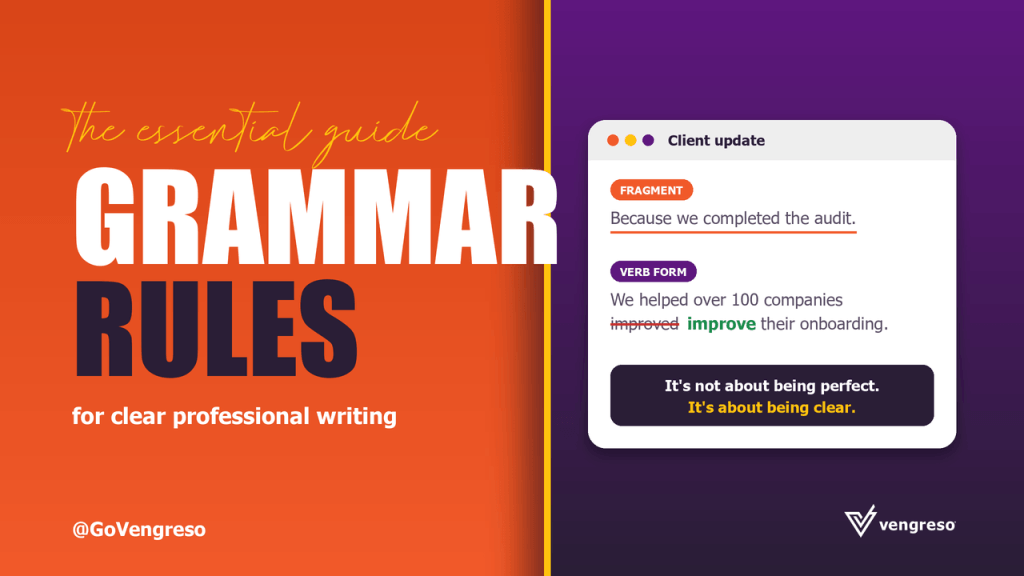
- Fragment + full sentence: “After reviewing the data; we changed the subject line.” Wrong. “After reviewing the data” is a dependent clause. Use a comma.
- Overuse: Two or more semicolons in a three-sentence Slack update feels stiff. Use two sentences or a comma with a coordinating conjunction.
- Semicolon as colon: “We need three things; budget, approval, and a timeline.” Wrong. Use a colon to introduce a list.
Read your sentence out loud. If you naturally pause as if the thought has ended, use a full stop. Style guides like AP and Chicago agree: do not capitalize the first word after a semicolon unless it is a proper noun. Students of grammar and working professionals alike trip over this rule.
Before-and-after examples: semicolon vs period in real messages
This table shows common workplace sentences rewritten for clarity.
| Before | After |
|---|---|
| The campaign launched Monday, we will share early numbers on Friday. (comma splice) | The campaign launched Monday; we will share early numbers on Friday. |
| Our pricing increased last month; but clients have not been notified. (semicolon + conjunction) | Our pricing increased last month, but clients have not been notified. |
| We hired reps in Austin Texas, Denver Colorado, and Miami Florida. (confusing list) | We hired reps in Austin, Texas; Denver, Colorado; and Miami, Florida. |
| The prospect ghosted us; I think we should try again. (weak connection, stiff) | The prospect ghosted us. I think we should try again. |

When you can say it cleanly in two sentences, choose that option. It reads faster on mobile screens and keeps your meaning impossible to miss.
Quick checklist and mini quiz
Before using a semicolon, ask:
- Are there two complete thoughts (independent clauses) on both sides?
- Are the ideas closely related in context?
- Is a transition word like “however” beginning the second sentence?
- Do the items in your list already contain commas?
If you answered “no” to question 1, do not use a semicolon. Period.
Mini quiz:
- “The dog needs a walk, the cat needs food.” → Semicolon or period. Two independent clauses joined by a comma is a comma splice. Fix: “The dog needs a walk; the cat needs food.”
- “We lost the deal; however, we learned from it.” → Correct. Semicolon before a conjunctive adverb, comma after.
- “Although the meeting ran long; everyone stayed.” → Wrong. The first half is a dependent clause. Replace the semicolon with a comma.
- “She presented in New York, New York; Chicago, Illinois; and Dallas, Texas.” → Correct. Semicolons separate items in a list with internal commas.

Let a tool catch semicolon slips before you hit send
Even strong writers miss punctuation issues when jumping between CRM tabs, email threads, and LinkedIn DMs. Small errors pile up fast.
FlyMSG AI Grammar Checker is a free Chrome and Edge browser extension that watches your punctuation while you write. It checks grammar, spelling, and punctuation as you type, so a semicolon in the wrong spot gets flagged before you hit Send. It works on any website with a text field, including email, LinkedIn, and your CRM, and it supports 80+ languages.
FlyMSG has a free plan. If you upgrade, use code 20PercentYr1 for 20% off your first year on an annual Growth or Business Pro plan. It fits a “Type Less. Do More.” workflow: you focus on your message, and the tool helps with the punctuation details.

FAQ: Common semicolon questions at work
Below are a few related questions professionals search for about semicolons, with short, direct answers.
Should I ever put a semicolon in an email subject line?
Avoid it. Subject lines work best when they are short and simple. A semicolon makes them feel crowded. Use a colon or a hyphen instead: “Q4 pricing update: quick confirmation” reads better than cramming a semicolon in there.
Do you put a space before or after a semicolon?
Put one space after a semicolon and no space before it. The semicolon sits right against the last letter of the first clause: “The deck is ready; the demo is next.” A space before the mark looks like a typo, so watch for it when you paste text from another app.
Does a semicolon go inside or outside quotation marks?
In American English, a semicolon goes outside the closing quotation mark. Example: She called the pricing “final”; we still asked for a discount. Commas and periods go inside the quotes, but semicolons and colons stay outside. Chicago and AP both follow this rule.
Can you use semicolons in a bulleted list?
You can, but you rarely need to. Some formal documents, like contracts and policies, end each bullet with a semicolon and put “and” before the last item. In work emails and slides, skip it. Short bullet fragments need no end punctuation, and full-sentence bullets take a period.